
Food Score
Calories tell you how much you ate. The Food Score tells you how good it was. Every meal you log in TrackAI gets a score from 0 to 100 for food quality, with a short reason, so you can see what is worth repeating.

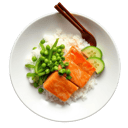 93%
Salmon poke bowl
520 kcal
Omega-3-rich salmon with edamame, avocado and cucumber makes a nutrient-dense bowl balanced across all macros.
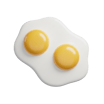 78%
Scrambled eggs with avocado toast
460 kcal
Eggs and avocado bring protein and healthy fats. White sourdough keeps the fiber modest.
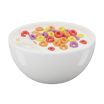 48%
Granola, ½ cup
250 kcal
Whole oats add fiber, but 10 g of added sugar per serving pulls the score down.
 12%
Glazed donut
260 kcal
Refined flour, fried and glazed with sugar. Almost no fiber, protein or micronutrients.
Examples of the kind of score and reason TrackAI gives.
What the score looks at
When TrackAI analyses a photo, a description, a barcode or a label, the AI rates the food on four things:
- How whole it is. Minimally processed foods (vegetables, legumes, whole grains, fish, eggs, plain dairy) score high; ultra-processed foods score low.
- Nutrient density. Protein, fiber, vitamins and minerals for the calories.
- Added sugar. Sweetened drinks, cereals and desserts lose points.
- Sodium. Very salty food is held back even when it is otherwise decent.
It is about quality, not portion size or calories. The reason always names what is helping and what is hurting, like "Good source of protein and fiber with no added sugar. The high sodium keeps the score in check."
Your daily score
The Food Score on Home is the calorie-weighted average of the day's scored meals. A 700 kcal dinner counts 140 times more than a 5 kcal coffee, so the number reflects what most of your food actually was.
Example day
(410 × 91 + 540 × 92 + 190 × 60 + 580 × 96) ÷ 1,720 = 90
Oatmeal, chicken bulgur, a latte and salmon with quinoa.
Nutrition Quality: four rings on Home
The Food Score sits next to three goals that are easy to miss when you only count calories.
Protein
Grams against a target tied to your body weight and goal.
Fiber
Grams against your fiber goal.
Micronutrients
Weighted average of 13 vitamins and 13 minerals against goals for your age and sex.
Food Score
Calorie-weighted average of your meals.
A ring turns green once you reach 75% of the goal and stays orange below that.
Not every vitamin counts the same
Topping up a nutrient almost nobody lacks should not hide a real gap. So the micronutrient ring weights each nutrient by how often people fall short of it, following the Dietary Guidelines for Americans' list of nutrients of public health concern. Each one is capped at 100% of its goal, so a megadose of one cannot cover for another. Sodium is left out: it is a limit, not a target, and is shown on its own.
Shortfall nutrients of public health concern
Vitamin D, folate, calcium, potassium, iron
Often under-consumed, high impact
Vitamins A, C, E and B12, magnesium, zinc, iodine
Meet-your-target nutrients
Vitamins K and B6, thiamin, niacin, copper, selenium
Deficiency almost never seen on a normal diet
Riboflavin, pantothenic acid, biotin, phosphorus, chloride, manganese, chromium, molybdenum
Questions
Does a low-calorie meal get a higher Food Score?
No. The score is about quality, not size or calories. A big bowl of lentil soup can score higher than a small pastry.
Why does my daily Food Score not match my best meal?
The day is a calorie-weighted average of every scored meal, so a 700 kcal dinner moves it far more than a 5 kcal black coffee.
Is the Food Score a medical rating?
No. It is an AI estimate of food quality to help you notice patterns. It does not know your health conditions; ask a doctor or dietitian about those.
What if I type the nutrition in by hand?
Foods entered by hand are scored too, from their name and numbers (calories, protein, fiber, sugar, sodium, saturated fat), with the same rubric as photos.

See the score on your own meals
Snap your next meal with TrackAI. Try it free for 3 days.